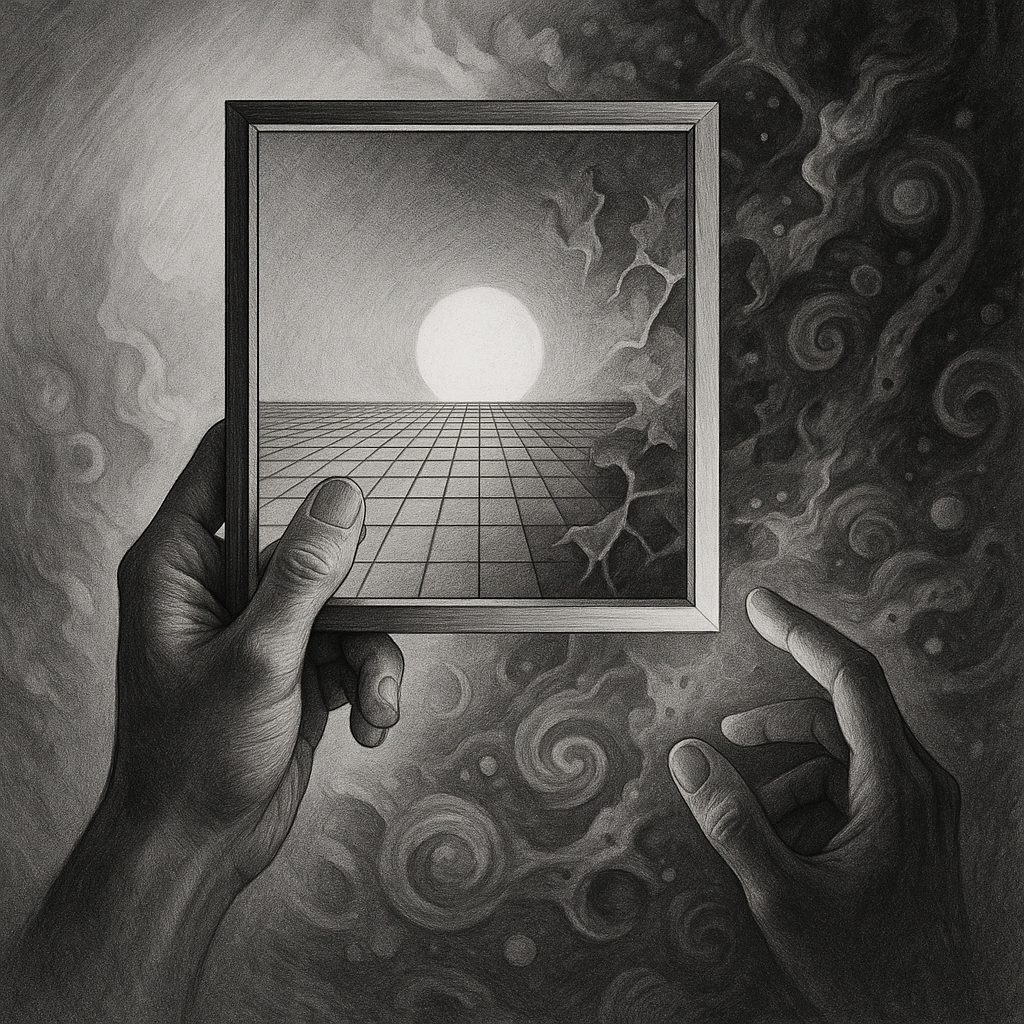
What is Intelligence? Layers of Emergence

How Intelligence Arises from Nature, One Layer at a Time

The Trouble with Definitions

“The Tao that can be named is not the eternal Tao.” — Lao Tzu

As a mathematician, I’ve long sought clean definitions. Much of my work involves building precise frameworks — starting by defining key concepts, isolating the core of a problem, formalizing it, and tracing its implications to their logical end.

Yet over time, I’ve come to see not just the limits of definitions, but their quiet distortions—the way they can flatten nuance in the name of clarity. The richness of a living idea gets traded for the sterile comfort of formal neatness. Sometimes, defining isn’t just clarifying — it’s an act of power: shaping perception, and granting authority to the one who defines.

Few ideas reveal this tension more vividly than intelligence. We talk about it as if we know what it is — a score, a skill, a spark. But what is it, really? And can something so dynamic ever be pinned down?

I think of intelligence not as a fixed trait, but as an experience — not unlike beauty — arising in context, felt through interaction.

So while we try to define intelligence — because we must — to witness it, to live with it, or to build systems that move with it, we need something else: humility. An attention to context. A willingness to recognize that intelligence, like beauty, is often messy, partial, plural, heuristic, and still astonishingly effective.

But even our capacity to see intelligence is shaped by history. In The Myth of Superintelligence, I argued that our attempts to define intelligence are never neutral. They reflect what we choose to measure, optimize, and reward. This essay is not a repetition of that critique. It is a step back. A shift in lens. It asks not what intelligence is, but when and how it arises—not as a trait, but as something unfolding across time, scale, and structure.

Because the power to define has always been the power to exclude. Colonial systems didn’t just extract labor and land—they imposed ways of seeing. In doing so, they dismissed the intelligence embedded in other ways of knowing, reframing rich knowledge traditions as myth or superstition. These distortions still echo in how we define and measure intelligence today. African polyrhythms were labeled primitive. Classical Indian music was exoticized or ignored. Indigenous knowledge systems—deeply attuned to land, season, and cycle—were reduced to folklore. Intelligence was there. But the lens refused to see it.

This is why any inquiry into intelligence must also be an inquiry into perspective. Definitions don’t just clarify. They constrain. They shape not only what we see, but what we believe intelligence can be.

This series is an attempt to widen the lens—to trace intelligence not as a fixed trait, but as a dynamic unfolding across layers of complexity. We begin with the silent elegance of physical systems, where matter flows under law, solving problems through coherence and constraint. From there, we enter the domain of evolution, where life adapts through variation and feedback, accumulating structure over time. We then move to the responsive intelligence of behavior—organisms without minds that nonetheless solve, coordinate, and learn through interaction.

But these are just the foundations. In the second half, we abstract upward: tracing how intelligence evolves the ability to frame problems, to reflect on and revise its own rules, and finally, to orient itself—to choose what matters. This is where intelligence becomes recursive, contextual, and ultimately, meaningful. Not just a solver of problems, but a seeker of value.

Read the full essay by subscribing (for free) to The Intelligence Loop.
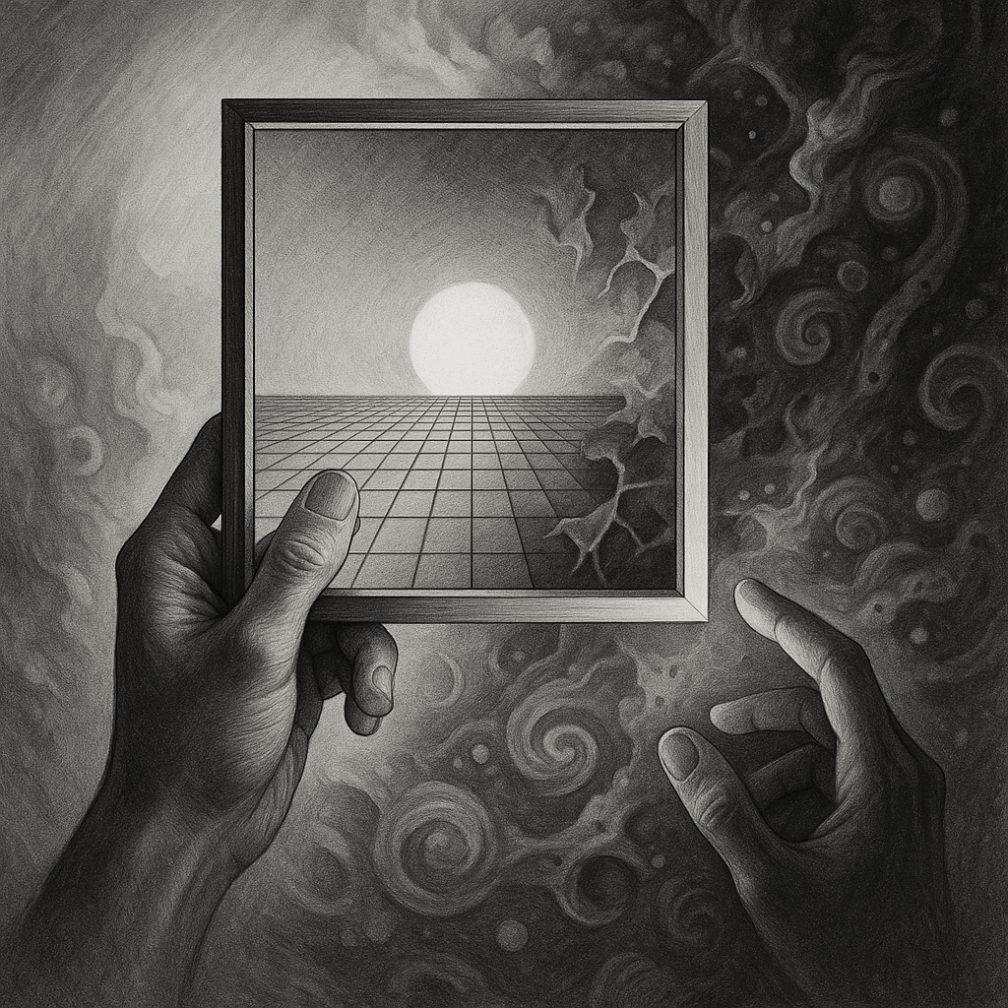
What Counts as Discovery? Rethinking AI’s Place in Science

नेति नेति
Not this, not this.
— Bṛhadāraṇyaka Upaniṣad

The Frame Before the Frame: A Prehistory of Discovery

Long before there were “scientists,” there was science. Across every continent, humans developed knowledge systems grounded in experience, abstraction, and prediction—driven not merely by curiosity, but by a desire to transform patterns into principles, and observation into discovery. Farmers tracked solstices, sailors read stars, artisans perfected metallurgy, and physicians documented plant remedies. They built calendars, mapped cycles, and tested interventions—turning empirical insight into reliable knowledge.

From the oral sciences of Africa, which encoded botanical, medical, and ecological knowledge across generations, to the astronomical observatories of Mesoamerica, where priests tracked solstices, eclipses, and planetary motion with remarkable accuracy, early human civilizations sought more than survival. In Babylon, scribes logged celestial movements and built predictive models; in India, the architects of Vedic altars designed ritual structures whose proportions mirrored cosmic rhythms, embedding arithmetic and geometry into sacred form. Across these diverse cultures, discovery was not a separate enterprise—it was entwined with ritual, survival, and meaning. Yet the tools were recognizably scientific: systematic observation, abstraction, and the search for hidden order.

This was science before the name. And it reminds us that discovery has never belonged to any one civilization or era. Discovery is not intelligence itself, but one of its sharpest expressions—an act that turns perception into principle through a conceptual leap. While intelligence is broader and encompasses adaptation, inference, and learning in various forms (biological, cultural, and even mechanical), discovery marks those moments when something new is framed, not just found. [A future essay will take up this broader view of intelligence—and how discovery both draws from it and transcends it.]

Life forms learn, adapt, and even innovate. But it is humans who turned observation into explanation, explanation into abstraction, and abstraction into method. The rise of formal science brought mathematical structure and experiment, but it did not invent the impulse to understand—it gave it form, language, and reach.

And today, we stand at the edge of something unfamiliar: the possibility of lifeless discoveries. Artificial Intelligence machines, built without awareness or curiosity, are beginning to surface patterns and propose explanations, sometimes without our full understanding. If science has long been a dialogue between the world and living minds, we are now entering a strange new phase: abstraction without awareness, discovery without a discoverer.

AI systems now assist in everything from understanding black holes to predicting protein folds and even symbolic equation discovery. They parse vast datasets, detect regularities, and generate increasingly sophisticated outputs. Some claim they’re not just accelerating research, but beginning to reshape science itself—perhaps even to discover.

But what truly counts as a scientific discovery?

This essay examines that question. Building on my earlier essay, Can AI Know Infinity?, I argue that today’s AI excels at recognizing structure, but not at reframing it. It doesn’t invent abstractions, ask better questions, or propose new ways of seeing. And that distinction—between fitting the world and reimagining it—is what separates tools of discovery from discovery itself.

Read the full essay—along with others on AI and the future of knowledge and institutions—by subscribing to The Intelligence Loop.
It’s a newsletter exploring how algorithms are reshaping judgment, reasoning, and discovery itself.
All posts are free. No paywall. No ads. Just ideas.